
Health Marketing Without the Hype: How to Build Trust
Health marketing has a trust problem, and it is not your imagination. Confidence in nearly every health authority has slipped. KFF found that trust in your own doctor fell from 93% to 85% in under two years, and trust in the FDA dropped from 65% to 53%. Add a feed full of miracle cures and wellness influencers, and your audience is automatically side-eyeing you. The instinct is to dazzle them with flashy prose and hype, but that’s not the right move.
In a field this wary, hype does not build belief. It burns it to the ground. The brands that win do the unglamorous thing: they tell the truth, show their work, and let that restraint do the talking.
Healthcare hype isn't just cringe, it's a liability
Overpromising is not only a vibe problem; it is a legal one. The FTC requires"competent and reliable scientific evidence" for any health claim, and it treats a glowing testimonial exactly like a claim you made yourself. Ask Lumosity: the brain-training company paid $2 million to the FTC after marketing that it could stave off dementia and Alzheimer's. The agency's verdict was blunt: the company did not have the science to back up its ads. It had also failed to disclose that some of those happy testimonials were collected through prize giveaways.
The lesson is not "lawyer up." It is that the shortcut, claim big and prove it later, is the exact thing that explodes your credibility.
What earns trust instead
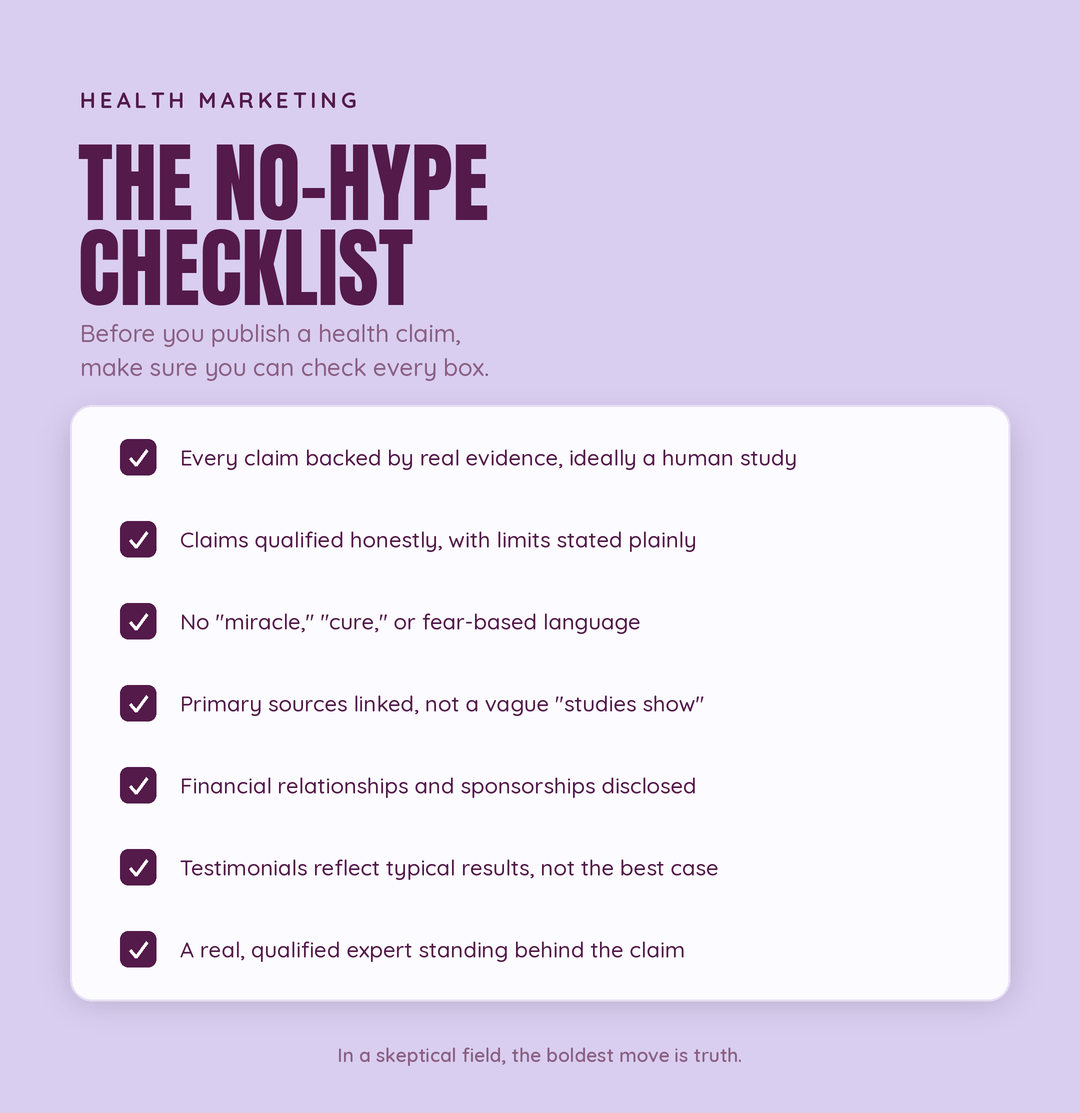
Say what it can't do. Honesty is wildly persuasive. A "results not typical" disclaimer doesn't rescue an inflated promise; an accurate promise in the first place does.
Cite real evidence. Link to the actual study, not a vague "studies show." Primary sources signal that you have nothing to hide.
Disclose every relationship. Sponsorships, affiliate links, paid experts: name them. The FTC requires it, and audiences quietly reward it.
Drop the fear. Scaring someone into a purchase really only works once. Lead with empathy, not panic.
Use plain language. Clarity builds confidence. Write like you respect the reader's intelligence, because they can tell when you don't.
Lean on the names we already trust
Look at who actually holds the public trust in health care: places like Mayo Clinic and Cleveland Clinic. They didn't earn it with razzle-dazzle. They earned it by being consistently useful and accurate, year after year. Their "marketing" is mostly just being right, in plain language. That is a playbook a health brand of any size can run with.
Play the Long game, keep the trust
Trust compounds. Every accurate, modest, well-sourced thing you publish makes the next one land a little easier, and a single inflated claim can wipe out years of that goodwill in an afternoon. In a skeptical field, the boldest move is truth. Be the brand that is still standing and still believed when the hype cycle moves on.