
Euphoria Is a Horror Series: How Male Creators Turned Female Suffering Into profitable art
Got a story about girlhood? About the struggles women and girls face growing up? About the suffering of women under the patriarchy, the unpleasant situations women end up in because of men? Give it to Sam Levinson. He's sure to find the most depraved, indulgent way to tell it, and to do so without letting a single female voice into the writers' room. Surely Sam Levinson, man in Hollywood, can tell your story better than you can.
And if you don't give it to him? He'll take it and tell it anyway.
If his name alone doesn't send a chill down your spine, let me introduce you. Because what HBO has been selling us as the defining teen drama of a generation is something else entirely. Euphoria isn't prestige television about girlhood. It's a horror series. And Levinson isn't a visionary documenting the pain of young women. He's the latest filmmaker in a fifty-year pipeline that has figured out how to package female suffering as art and sell it back to us with bisexual lighting and a kickass soundtrack.
When in Doubt, Torture the Women.
As I said, Sam Levinson isn't creative enough to manufacture this phenomenon.
Back in 1960, before the release of one of his most notable films, Psycho, Alfred Hitchcock was asked about his creative philosophy. Quoting the playwright Victorien Sardou, his response was: "Torture the women." Hitchcock's "secret sauce" became the playbook for the genre for years to come. A woman's death acts as the crescendo in a horror film in the same way an airport kiss is to a romantic comedy.
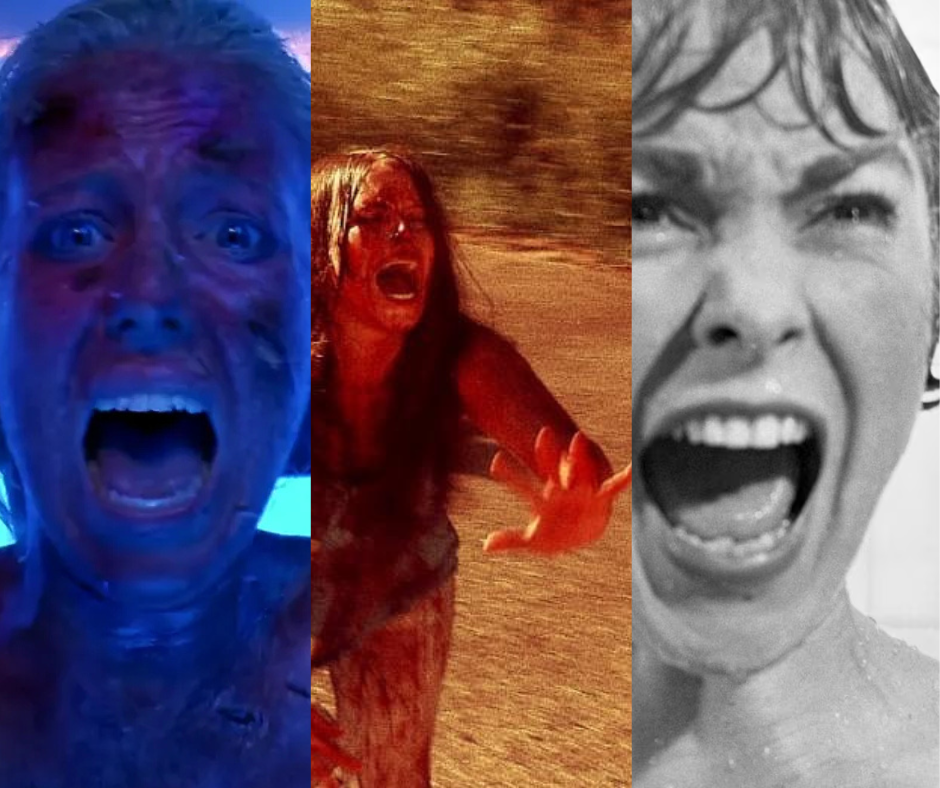
In 1974, The Texas Chain Saw Massacre kicked things up a notch by introducing the world to what critic Carol Clover would later coin the "final girl," Sally, in this case, and then giving her two hours and an acre of land to run for her life and suffer. The final girl is scrappy. She's scared and alone. She survives. The male audience, Clover argued, is structurally compelled to identify with her, seemingly presenting the film as feminist media when, in reality, it was anything but. If she's going to survive, she'd better crawl her way to the end of the movie. Every director from Eli Roth to Damien Leone to Sam Levinson uses Clover's framework the same way: the girl survives, therefore the film is feminist, therefore I can put these women in violent, often sexually dangerous situations on the way there.
By 2006, the critic David Edelstein had coined the term ‘torture porn.’ Saw, Final Destination, Black Christmas. Linda Williams identified this back in 1991 as the defining move of "body genres," the category that groups horror with pornography. Both, she argued, use the female body as the primary instrument for generating a physical response in the viewer.
Which brings us back to Sam Levinson, who didn't have to invent a single one of these techniques. He just leveraged them to elevate a more accessible genre: teen drama.
Sam Levinson: A One-Man Writers' Room
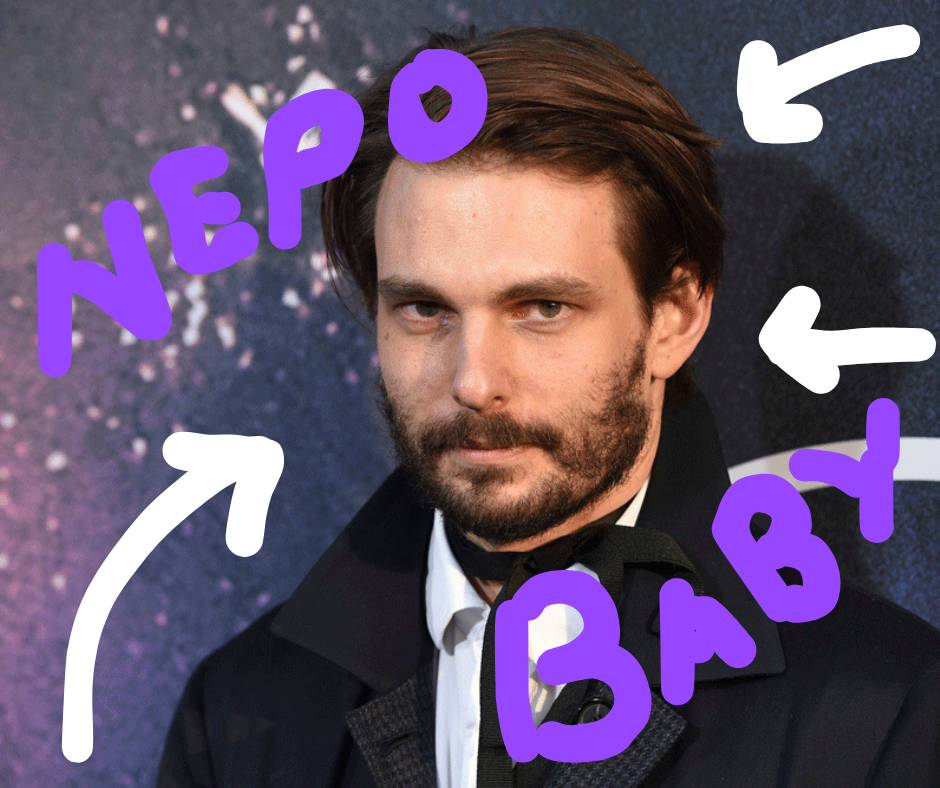
Did you know that Sam Levinson was a nepo baby?
His daddy, Barry Levinson, directed the Academy Award-winning film Rain Man.
Levinson’s first major credits came through his father's HBO projects. By 2018, he had directed Assassination Nation, a film that an LA Times critic panned for its "sexualized violence" and male gaze. The next year, he was gifted Euphoria.
The official story is that Euphoria is a remake of an Israeli teen drama. The unofficial story, told by photographer Petra Collins back in 2023, is more complicated. Collins, whose pastel-and-neon photographs defined a decade of female visual culture, says Levinson approached her agency before Euphoria was made, told her he had written a show inspired by her photographs, and asked her to direct it. Collins moved to Los Angeles, worked with HBO for months, and helped build the world we now associate with Euphoria. Then HBO told her she was too young, and her dreams were swiftly crushed. A year later, she walked outside her apartment, saw a Euphoria billboard, and called it a copy of her work. (Disclaimer: A source close to Levinson denied her account to the Daily Beast. HBO never publicly responded.)
Fundamentally, the series was built on a woman's vision, and then her voice was effectively removed from the conversation. When discussing the male gaze, Laura Mulvey often refers to the camera work, the actual film part of the film. But Levinson seemed to move the male gaze upstream. The gaze isn't just where the camera lingers. It's who gets to hold the camera in the first place.
Levinson is the sole credited writer on every episode of Euphoria except one, which he co-wrote with the actress Hunter Schafer. He has directed all but three. There is no writers' room. His vision exists in a vacuum. Back in 2022, Levinson told the Television Academy that he writes alone because a writers' room would feel "suffocating." Most prestige dramas use writers' rooms because storytelling at this scale requires more than one perspective, and because one man writing teenage girls' interior lives, sex lives, and racial experiences is, on its face, an absurd structural choice.
By the second season of Euphoria, four different actresses had reportedly asked Levinson to cut nudity from his scripts. Sydney Sweeney told The Independent in early 2022 that she repeatedly asked him to remove unnecessary topless scenes for her character, Cassie.
"There are moments where Cassie was supposed to be shirtless," she said, "and I would tell Sam, 'I don't really think that's necessary here.'" —Sydney Sweeney
Minka Kelly, who played Samantha, the wealthy mother of the child Maddy babysat, told Vanity Fair that Levinson originally wrote her introductory scene with her dress falling to the floor, and she had to push back on her first day on set. Chloe Cherry, who played Faye, described similar negotiations with the showrunner.
None of these actresses officially accused Levinson of misconduct. They are describing a working environment in which the default script position was: the woman is naked. They had to argue their way back to clothed. That is what the male gaze looks like at the production level.
Levinson's behavior isn't contained to the Euphoria set, however. In March 2023, Rolling Stone's Cheyenne Roundtree published an investigation built on interviews with thirteen cast and crew members of HBO's The Idol, and it remains the single most damning piece of evidence against Sam Levinson to date.
Originally, the series had been directed by Amy Seimetz, the respected filmmaker behind The Girlfriend Experience. Her version built a show around Jocelyn, a young pop star reclaiming her agency from a predatory music industry. Lily-Rose Depp had been cast in the role. Then The Weeknd, who co-created and starred in the show, allegedly decided the project was leaning too far into a "female perspective." Seimetz was out. Levinson was in. The script was rewritten. Most of the crew did not return.
What Levinson produced in her place was one of the most disturbing displays of torture porn I've seen on television. Rolling Stone reported that he proposed a scene in which Jocelyn would carry an egg inside her body and beg The Weeknd's character to assault her. The scene was not filmed only because the production could not figure out how to shoot it.
If you needed any more evidence of how Levinson feels about women advocating for themselves on his sets, look no further than the first episode of The Idol itself. In a now-infamous scene, Jocelyn is being prepped for a photo shoot when an intimacy coordinator arrives to enforce her nudity rider. The coordinator is staged as the villain, an obstacle keeping Jocelyn from her own self-expression, the prudish bureaucrat killing the vibe. Jocelyn eventually locks her in a bathroom to get her out of the way.
SAG-AFTRA made intimacy coordinators an industry standard in 2020. They exist because women in this industry have spent decades being pressured into nudity they did not consent to. Levinson wrote a scene mocking the profession, framed it as a statement of feminist self-determination, and included it in the pilot of his show.
HBO eventually issued a statement acknowledging that early production "did not meet" its standards. The Idol became HBO's worst-reviewed series. It was not renewed.
He is not a uniquely depraved figure. He is a man who inherited a fifty-year tradition of telling women's stories without women in the room, and who has been rewarded for it with Emmys, billboards, and a $110 million budget. The horror is not that he is doing something new. The horror is how easy it has been for men to fetishize and market female suffering.
Art the Clown and Sam Levinson Walk Into a Bar Full of Vulnerable Women
The difference between Damien Leone, screenwriter and director of the Terrifier franchise, and Sam Levinson is budget, audience, and the genre label on the marketing materials. It is not the genre itself.
If you have not subjected yourself to the Terrifier franchise, congratulations. You are better than I am. The films follow Art the Clown, a silent killer who stalks women on Halloween night and dispatches them in increasingly elaborate ways.

By Leone's own design, this is a series in which the most elaborate and prolonged kills are reserved for women. In Terrifier 1, Art saws a woman in half from crotch to skull while she is hanging upside down. In Terrifier 2, he spends roughly fifteen minutes torturing a teenage girl in her bedroom with a hammer, scissors, and salt. In Terrifier 3, he kills a man and writes the words "cunt pig bitch slut whore filth" in the man's blood next to a female victim. Male victims in the Terrifier films, when they appear, tend to die quickly and fully clothed. Female victims tend to die slowly and in some state of undress. Surely this kind of content isn't widespread, though, right? You tell me.
The first film, made for $35,000 in 2016, was a cult-circuit oddity. Terrifier 2 grossed over $15 million in 2022. Terrifier 3, released in 2024 on a budget of roughly $2 million, cleared $90 million worldwide. The franchise is now one of the most profitable horror operations of the decade.
Leone has addressed the misogyny accusations multiple times. He has said he is "the furthest thing from a misogynist." He has pointed to his Final Girl, Sienna, as evidence of his feminist intent. By Terrifier 3, he had visibly course-corrected toward more male victims, though several critics read it as PR rather than artistic evolution.
This is where Linda Williams' ideas become load-bearing. Williams argued that horror, melodrama, and pornography are what she called "body genres," a category united by the fact that all three work by producing a visible physical response in the viewer's body. You scream at horror, you cry at melodrama, you become aroused by pornography. And in all three, Williams pointed out, the female body is the primary instrument the genre uses to generate that response. Terrifier and Euphoria are doing the same thing. They are using women's bodies to produce a physical reaction in the audience. They are just playing the instrument at different volumes.
Horror scholar Steve Jones has pushed back on the misogyny critique of films like Terrifier with quantitative data. In his 2013 book Torture Porn, he counted bodies and found that male victims actually outnumber female victims in the canonical torture porn cycle. He is not wrong. He is also not making the argument that the films themselves are making. The argument is in the duration. The argument is in the framing. The argument is in the camera that lingers on the woman's destruction for fifteen minutes and dispatches the man in fifteen seconds. The argument is in which scenes get screencapped, gif'd, and turned into the franchise's marketing material.
The Gaze, Redirected
By now, you might be wondering whether I am arguing that we should stop showing women suffering on screen altogether. I am not. The argument has never been about content. It has been about who gets to hold the camera, who gets to write the script, and who gets to decide what the suffering means. What does it look like when a woman holds the camera?
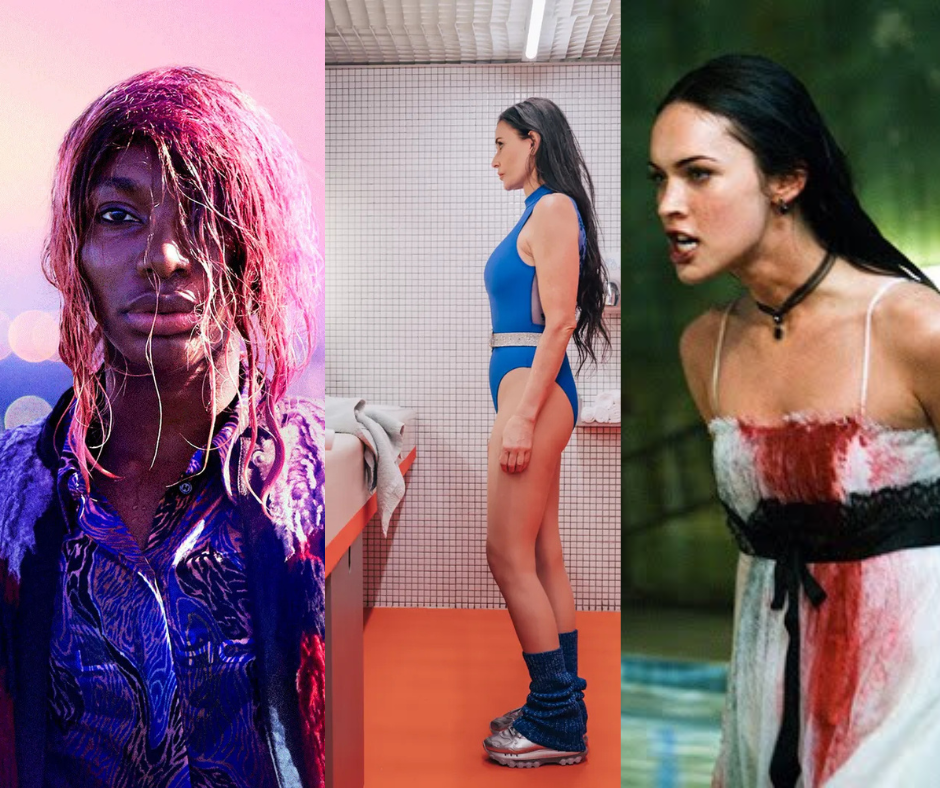
In 2024, the French director Coralie Fargeat released The Substance, a body horror film starring Demi Moore as an aging television fitness star who injects herself with a black-market drug that allows her to birth a younger, more beautiful version of herself, played by Margaret Qualley. The film is, by any measure, more graphic than anything Sam Levinson has ever put on television. Bodies split open. Skin stretches and tears. By the final twenty minutes, Moore's character has become a heaving mass of misshapen flesh, bodiless and free.
The Substance, conceivably, does the same thing Levinson does. It shows a woman's body in extended, grotesque suffering. The camera lingers. The makeup budget is showcased. The audience is meant to flinch. And yet the experience of watching it is fundamentally, structurally different from the experience of watching Cassie's carousel breakdown or Jocelyn's photo shoot. The difference is not in what is on screen. The difference is in who is asking you to look at it, and why.
In her 1993 book The Monstrous-Feminine, film theorist Barbara Creed argued that the female body has always been horror's primary site of what she called abjection, the things we expel from ourselves to maintain the illusion of being clean and contained: blood, fluids, fat, age, decay. Horror, she argued, has spent a century making spectacles out of the things women's bodies do that men's bodies do not. Menstruation. Pregnancy. Aging. Dying.
Creed's framework explains the "secret" that propels The Substance far past Euphoria. Fargeat is not asking you to consume Demi Moore's degradation. She is asking you to recognize yourself in it. The film is about what it is to be a woman who has spent her career being looked at, and who is now being told she is too old to be looked at, and what she will do to herself to keep the looking going. The grotesque body horror is not the spectacle. It is the metaphor. The audience is meant to leave the theater horrified at the system that produced the metaphor, not aroused by the woman dragging herself across the stage.
The same shift is at work elsewhere. Karyn Kusama's Jennifer's Body, written by Diablo Cody in 2009, was marketed as a horror film about a sexy demon-girl killing teenage boys, and dismissed at the time as exactly that. Nearly two decades later, audiences finally caught up to what the film was actually about: a teenage girl who is sexually assaulted by a band of older men and reborn as something monstrous. The boys were collateral damage in the rampage of a girl who had been failed. Megan Fox was right all those years ago. We weren't ready for that conversation.
These films are graphic. They are sometimes more graphic than anything Levinson or Leone has produced. They are the proof that the problem was never the content but the gaze.
Who Sets the Standard and Who Pays the Price
If the gaze is the problem, and we have known it is the problem since at least 1975, why is the industry still rewarding it? Why is HBO still cutting Levinson $110 million checks? Why is Damien Leone in pre-production on Terrifier 4? Why are we, the audience, still watching?
Transparently, suffering is engaging, and audiences have always wanted what they have always wanted. I can’t pretend like I’m above consuming this media. I, myself, am a fan of many problematic and depraved horror franchises and television shows.
The French theorist Julia Kristeva called this kind of thing abjection: the process by which a body is rendered something the audience expels to feel clean themselves. The horror genre has always trafficked in it. What is new, or at least newly mainstream, is the use of real young women as the abject material. Cassie Howard is a character. Sydney Sweeney is a person. The camera does not know the difference, and the audience increasingly does not either. The trolling, the screencaps tagged to Sweeney's family, the discourse about her body that has followed her out of every premiere for the last six years: all of it is the cost of a labor model in which a young woman's degradation is the product.
This is the part that makes Euphoria a horror series. Not the carousel breakdown. Not the OnlyFans montage. The horror is that this media sets the standard. When women are tortured by men for art, profit, or both, those men are setting the standard for the generation consuming the content. When men tell our stories, they tell them how they expect us to be: scared, weak, and profitable.
So yes, give your story to Sam Levinson. Give him your girlhood, your trauma, your assault, your body, your aesthetic. He will take it. HBO will give him $100 million to manipulate and indulge in your trauma, your ideas, or your entire essence of being.
Or do not give it to him. Give it to Coralie Fargeat. Give it to Diablo Cody. Give it to Karyn Kusama. Give it to Michaela Coel. Give it to the women who have been telling these stories for fifty years and getting marketed at the wrong audience, dismissed as too young, denied the budget, and replaced by nepo baby directors and writers with better connections.
Give it to a woman with a writers' room.
Men have always been drawn to women's suffering. The horror is that we built a cultural infrastructure to reward them for it.
Torture the women, Hitchcock said, and the industry he built has spent sixty-five years figuring out how to do it in new, more depraved ways.
References
Clover, Carol J. "Her Body, Himself: Gender in the Slasher Film." Representations, no. 20, Autumn 1987, pp. 187-228.
Clover, Carol J. Men, Women, and Chain Saws: Gender in the Modern Horror Film. Princeton University Press, 1992.
Creed, Barbara. The Monstrous-Feminine: Film, Feminism, Psychoanalysis. Routledge, 1993.
Edelstein, David. "Now Playing at Your Local Multiplex: Torture Porn." New York Magazine, January 28, 2006.
Jones, Steve. Torture Porn: Popular Horror After Saw. Palgrave Macmillan, 2013.
Kristeva, Julia. Powers of Horror: An Essay on Abjection. Columbia University Press, 1982.
Landau, Neil. The TV Showrunner's Roadmap: Creating Great Television in an On Demand World. Focal Press, 2022. (Includes interview with Sam Levinson.)
Mulvey, Laura. "Visual Pleasure and Narrative Cinema." Screen, vol. 16, no. 3, Autumn 1975, pp. 6-18.
Williams, Linda. "Film Bodies: Gender, Genre, and Excess." Film Quarterly, vol. 44, no. 4, Summer 1991, pp. 2-13.