
Writing for LinkedIn vs. Instagram vs. TikTok: How to Read the Room
Posting the exact same content to LinkedIn, Instagram, and TikTok is like wearing a tuxedo to a job interview. Not technically wrong, just sort of unaware. Each platform is a different room, with a different crowd, in a different mood. The words that kill on TikTok will flop on LinkedIn, and the reverse is just as true. Reading the room and adapting your content is a necessary strategy in the age of social media.
First, know the crowd
Before you worry about tone, look at who you are talking to. The crowd is fundamentally different on each platform.
LinkedIn is where we get stuff done. It draws the most college-educated, higher-income audience of the three, and it skews a little older, with 30- to 49-year-olds the most active. People show up in work brain: thinking about their career, their industry, their next hire, or their next opportunity.
Instagram is broad but younger and a little more female, with eight in ten adults under 30 using it. It is visual-first and discovery-driven, a place people browse for inspiration, aesthetics, and things to buy.
TikTok is the youngest room by a mile. Roughly half of under-30s are on it every single day, and they came to be entertained, not sold to. Authenticity beats polish here, every time. Despite the booming e-commerce landscape, TikTokers are especially sensitive to overly salesy, obvious cash grabs. They will see through you and write you off instantly.
Give the people what they want
LinkedIn: lead with the lesson. Write like a sharp, human professional, not a press release and not a motivational poster. Open with a hook, because the feed cuts your post off after a few sentences. Longer, story-driven posts work here, as long as they land on an insight someone can actually use. Skip the jargon and avoid the humble-brag.
Instagram: let the visual talk, then add the soul. The image or video does the heavy lifting, and your caption adds personality, context, or a quick story. Keep it warm and conversational, front-load the good part before the "more" cutoff, and invite engagement.
TikTok: write like you talk, fast. You have about a second to hook someone before they swipe away, so the first line, spoken and on-screen, is everything. Casual, native, and a little unpolished is the point, not a bug. Be trend-aware but still on-brand. If it sounds like an ad, it dies. If it's a meme that feels completely inorganic within your brand's context, it dies.
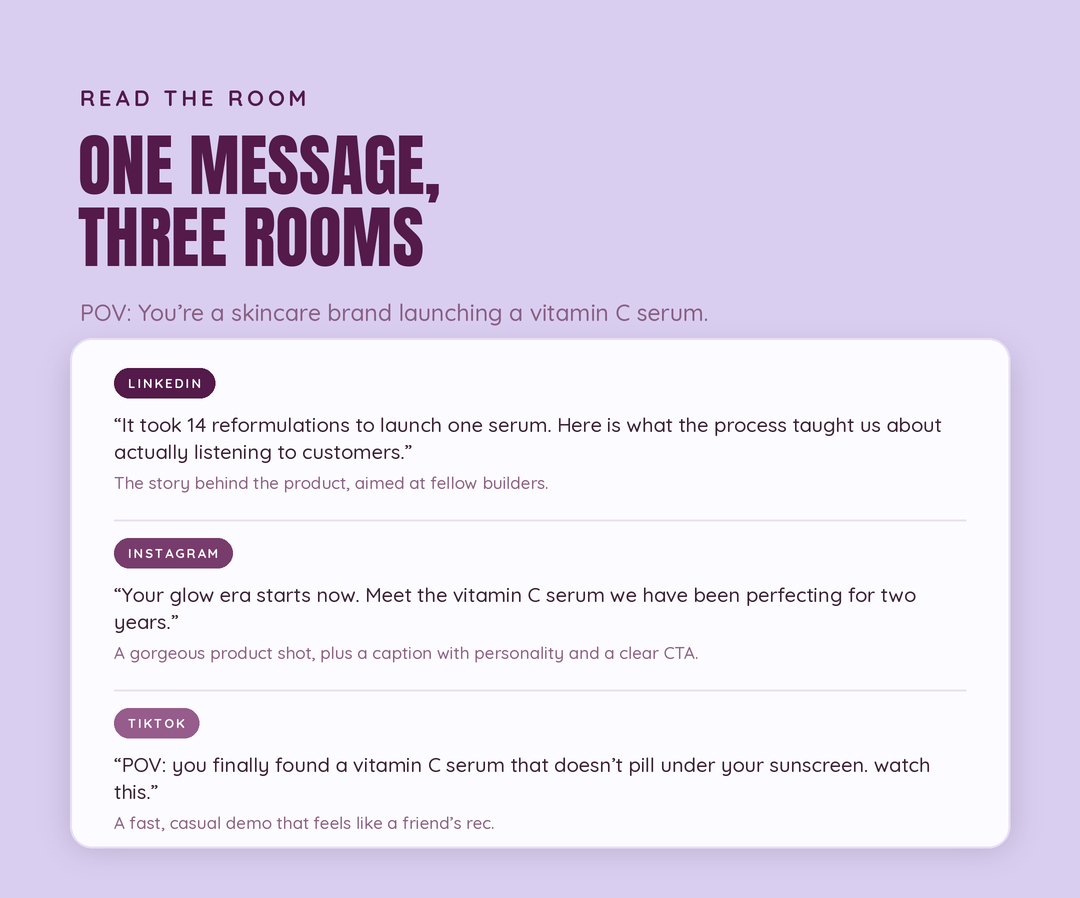
Understanding your audience is everything
Being everywhere does not mean saying the same thing everywhere. The brands that win on social do not copy and paste the same copy across three platforms. Keep the heart of your message, then change the delivery to fit who is in the room and why they showed up. Know your audience, match your voice, and you will sound like you actually belong there.