
Healthcare on Social: How Science-Based Brands Create Content Without Being Cringe
Health brands tend to pick one of two losing strategies on social.
Option one: stay stiff, clinical, and "professional," and watch every post sink without a trace.
Option two: chase whatever sound is trending, slap a dance on it, and produce something so try-hard it makes everyone's skin crawl.
There is a third way, and data says it is exactly what people want to see on socials: be the voice that is both accurate and human. Not a full textbook and not a try-hard. A real, knowledgeable person who is worth listening to.
Why is your voice needed here?
People are getting their health information from social media whether you join in or not. In one survey of Gen Z, a third said TikTok is their main source of health information, and most only trust that advice when it comes from a doctor, nutritionist, or other credentialed expert. The catch is that the feed is a mess: three in five said they had already seen health misinformation on the platform.
Here is the part most brands miss. The chaos is your opportunity to flex your knowledge. People are actively scanning for someone credible to trust, and a peer-reviewed study found they not only prefer health information from actual health professionals but are more likely to act on it. Your credibility is not a limit on your content. It is your competitive advantage on socials.
Credible ≠ Boring
The science-based creators who win are the ones who explain real things in plain, warm, human language. Think Dr. Mike, or any of the epidemiologists who blew up explaining studies during the pandemic. They did not dumb it down or dance for attention. They respected the audience's intelligence and sounded like actual people, and they were rewarded with trust.
The goal is to be right and be human at the same time. One without the other is either cringe or boring. Together, it makes scroll-stopping content.
Content that actually works
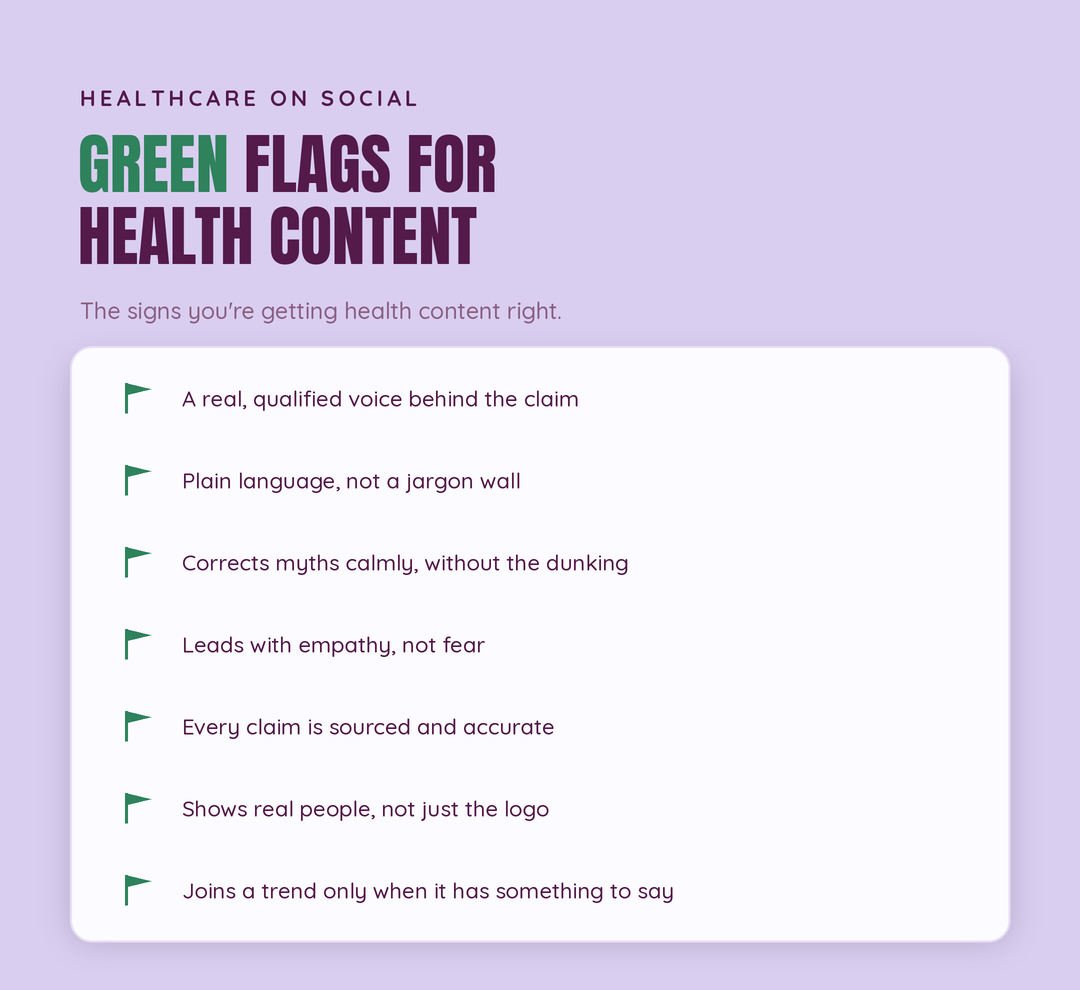
Myth-busting, minus the dunking. Your audience is already seeing the bad advice. Be the calm correction, not the smug debunker. "Here is what is actually going on" beats "I can't believe people fall for this."
Explain one thing simply. Translate a study, a term, or a process into plain language. Turning the clinical into the clickable is a genuine superpower.
Show the humans. Behind-the-scenes of your team, your clinicians, your space. People trust faces, not logos.
Answer real questions. Build content from the questions your audience actually asks. If they are Googling it at 2 am, they want you to cover it.
Tell real stories. A patient or customer story, shared with permission, connects in a way no statistic can. Just keep it honest.
The line between human and cringe
Cringe usually comes from substance-free imitation: a trend with no point, fear-mongering for clicks, a wall of jargon, or over-promising results you cannot back up. The fix is not to drop the personality, it is to anchor it in something real. A trend is fine if it carries an actual message. Humor is fine if it fits your brand. Lead with empathy instead of fear, sound like a knowledgeable human instead of a pamphlet, and you will clear the cringe bar easily.
One quick guardrail while you experiment: never share patient information without consent, and make sure you can source every claim.
Be the one they trust
The health brands that win on social are not the loudest or the most polished. They are the ones people both trust and enjoy following. In a feed full of noise and nonsense, being accurate and human is not boring; it's your path forward.