
How to Write an Email Pitch That Doesn't Get Ghosted
Journalists are drowning. The average reporter gets more pitches in a day than they could ever respond to, and some admit to never even opening the emails to begin with.
Fun fact: a large majority of journalists delete a pitch on sight if it doesn't fit their beat.
Your release usually doesn't die because the news is boring. It dies because it landed in the wrong inbox, in the wrong format, making the wrong first impression. The good news is that a press release that gets read isn't longer or louder. It's just built for a busy human who decides in about three seconds.
Press release or pitch?
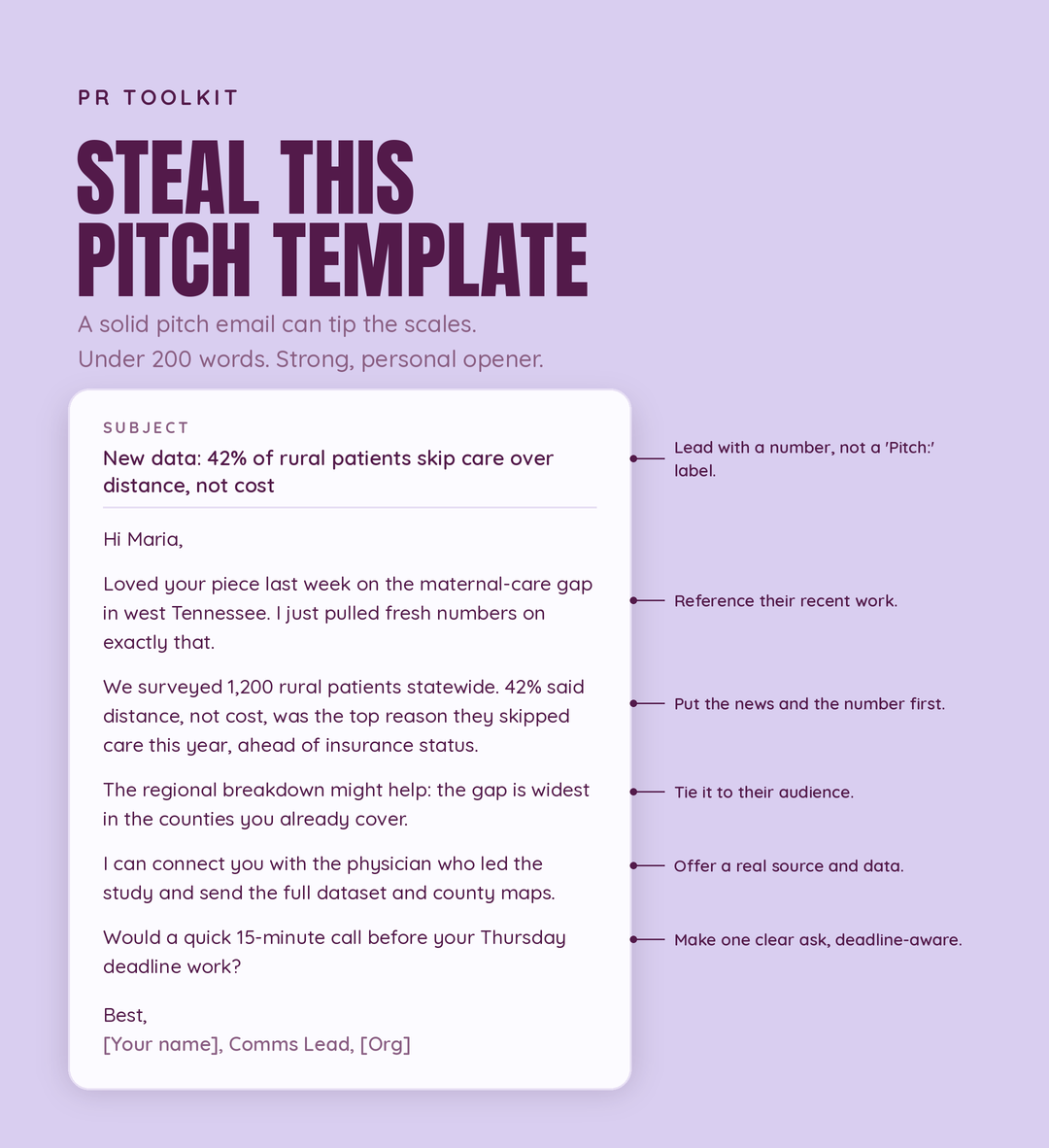
Quick distinction, because mixing up a press release and a pitch is the fastest way to get ignored. A press release is the document: a headline, a dateline, the facts in order, a quote, a boilerplate, and the little "###" at the end. A pitch is the short, personal email that carries it. The release gives the details; the pitch is how you earn the document download.
Lead with the actual news
Survey after survey puts relevance at the very top of what makes a journalist read or delete, so the first job of your release is to answer "why this, why now, why you" in the opening line, not in paragraph four.
Try the Inverted Pyramid! Most newsworthy fact first, supporting detail next, nice-to-know background last. Assume a reporter will only read your first sentence, and make sure that sentence still tells the story.
Make it skimmable, then make it short, then make it a little bit shorter
Before any of that, your subject line is the bouncer: short, specific, and leading with the hook or a number. If it reads like an ad, it never gets opened. Inside the release, keep it clean. A headline that states the news in plain words, not clever wordplay. A strong lead. One quote that actually says something, not a CEO who is "thrilled" about "collaboration." Links to data, images, and a real person they can interview, because access to credible sources is one of the things journalists want most.
Then keep the whole thing tight. A release can run 400 to 600 words; the email built around it should rarely top 200.
Don't spam, and don't sound like a robot
Sending the same release to 200 inboxes is how you get blocked, not published. Pick the handful of journalists who genuinely cover your space and tailor each note. And here's a 2026 reality: most journalists now use AI to research, but they can smell an AI-written pitch, and many say it reads like a bot wrote it. Use the tools to prep and tighten if you want, but the voice has to be yours.
The press release skim test
If your release fails any of these, a busy reporter will move on. Run down the list before you hit send.
[ ] Subject line is short, specific, and leads with the hook or a number
[ ] Headline states the actual news in plain language
[ ] First sentence answers why this, why now, why you
[ ] Inverted pyramid: key facts up top, background at the bottom
[ ] One quote that adds insight, not filler
[ ] A real source offered up for interview
[ ] Data, images, or links included
[ ] Whole release under 600 words, pitch email under 200
[ ] Sent to a specific, relevant journalist, not a blast
Putting it all together
A press release that doesn't get left on read respects the busy journalist. It's relevant, it leads with the news, it's easy to skim, and it comes from a human who clearly knows the person they're emailing. Put all of those elements together, and you stop being one more deleted message and start being the easiest "yes" in a crowded inbox.